
Compiled by Tan Hung Phu Technical Team · Updated: October 2026
In industrial water treatment, commercial aquaculture, and swimming pool sanitation, chlorine chemicals – particularly Chlorine 70% (commonly known as calcium hypochlorite 70) – serve as foundational oxidative disinfection agents. Unlike liquid sodium hypochlorite (NaOCl / Javel water), which rapidly degrades and loses active strength under ambient heat and light exposure, solid-state calcium hypochlorite with the chemical formula Ca(OCl)₂ (often formulated as Ca(ClO)₂) delivers high available chlorine content (≥ 70%), exceptional thermal stability, and prolonged shelf life.
However, in actual water plant operations and pond disinfection, the Ca(OCl)₂ molecule itself does not directly eradicate pathogens. The core germicidal power originates from the hydrolysis reaction releasing hypochlorous acid (HOCl) – an electrically neutral molecule exhibiting a biocidal efficacy 80 to 100 times stronger than the hypochlorite ion (OCl⁻). In this technical guide, THP Chemical provides an in-depth analysis of the reaction kinetics, the vital dependence on water pH, and contrasts the manufacturing chemistry between the Sodium Process vs. Calcium Process to assist process engineers and procurement teams in selecting the optimal product line.
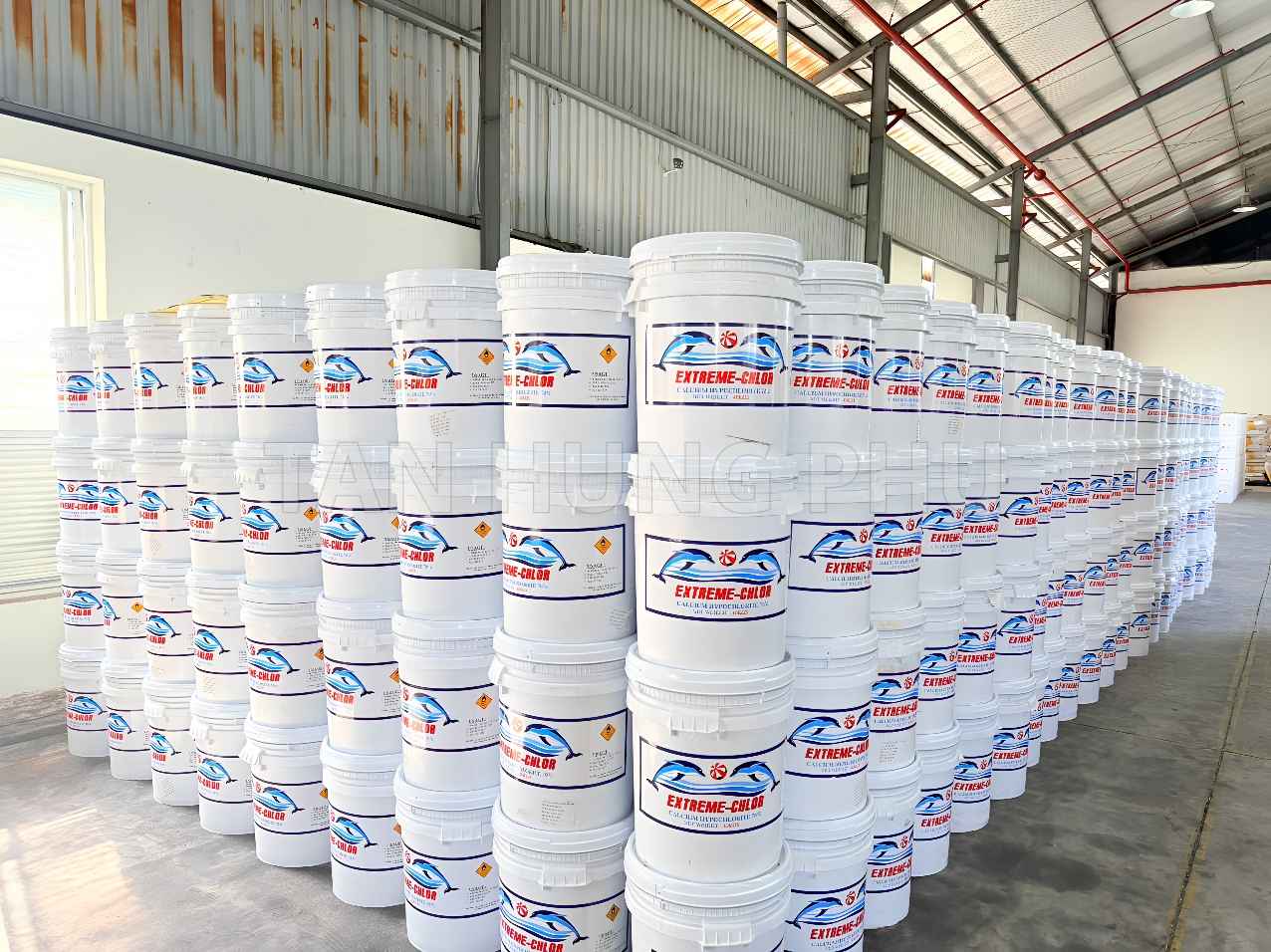
Table of Contents:
- 1. What is Chlorine 70% (Calcium Hypochlorite – Ca(OCl)₂)?
- 2. Mechanism of Hypochlorous Acid (HOCl) Release and the Decisive Role of Water pH
- 3. Microbial Cell Membrane Inactivation Mechanism by Chlorine
- 4. Manufacturing Technology Comparison: Sodium Process vs. Calcium Process
- 5. Practical Applications and Dosage Guidelines for Chlorine 70%
- 6. Prime Chlorine 70% Brands Distributed at Tan Hung Phu Warehouse
- 7. Safe Dilution Guidelines and Chemical Warehouse Storage Standards
- 8. Frequently Asked Questions (FAQ)
- 9. Scientific References & Chemical Databases
1. What is Chlorine 70% (Calcium Hypochlorite – Ca(OCl)₂)?
Chlorine 70 (also marketed under names such as granular chlorine, bleaching powder, or chlorinated lime) is an inorganic chemical salt with the formula Ca(OCl)₂ or Ca(ClO)₂, systematically designated as Calcium Hypochlorite (CAS: 7778-54-3). Under ambient conditions, it presents as a white or off-white granular solid with a characteristic pungent chlorine odor and high aqueous solubility.
The 70% rating denotes the Available Chlorine Content (≥ 70.0% wt). This is an international benchmark comparing the oxidative capacity of a chlorine compound against pure elemental chlorine gas (Cl₂). Consequently, 1 kg of calcium hypochlorite 70% provides an oxidation potential equivalent to 0.7 kg of liquefied elemental chlorine gas, while offering substantially greater storage and operational safety in commercial handling.
| Physicochemical Property & Classification | Standard Technical Specification |
|---|---|
| Chemical Name / IUPAC | Calcium Hypochlorite |
| Molecular Formula / Molecular Weight (M) | Ca(OCl)₂ or Ca(ClO)₂ | M = 142.98 g/mol |
| Appearance & Physical State | White or off-white granular powder, pungent chlorine odor |
| Available Chlorine Content | ≥ 70.0% Min |
| Controlled Moisture Content | • Hydrated grade: 4.0% – 10.0% (UN 2880 Standard) • Dry / Anhydrous grade: ≤ 1.5% (UN 1748 Standard) |
| Hazard Classification | IMO Class 5.1 (Strong Oxidizing Agent) – Subsidiary Risk Class 8 (Corrosive), Packing Group II |
2. Mechanism of Hypochlorous Acid (HOCl) Release and the Decisive Role of Water pH
Hydrolysis Reaction in Aqueous Solution
Upon dissolution in water, calcium hypochlorite completely dissociates into calcium ions and hypochlorite ions according to the following reaction:
Concurrently, a dynamic reversible equilibrium is established between hypochlorous acid (HOCl) and the hypochlorite ion (OCl⁻), which is strictly governed by the water pH:
The Critical Relationship Between pH and Disinfection Efficiency
The sum of [HOCl] + [OCl⁻] is defined as Free Available Chlorine (FAC). However, their respective bactericidal capabilities differ tremendously:
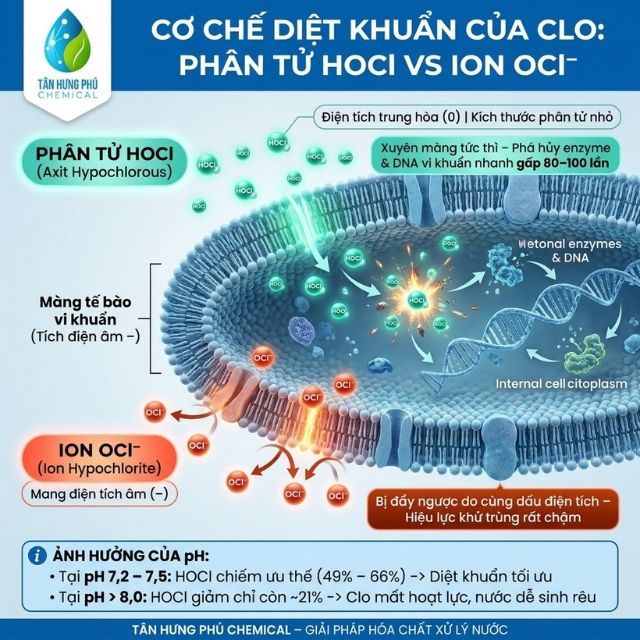
- HOCl (Hypochlorous Acid): Electrically neutral and small in molecular size, allowing it to penetrate the negatively charged bacterial cell walls and lipid bilayers unimpeded. The biocidal efficacy of HOCl is approximately 80 to 100 times higher than that of OCl⁻.
- OCl⁻ (Hypochlorite Ion): Negatively charged. It faces electrostatic repulsion from bacterial cell membranes (which also carry a net negative charge), resulting in a sluggish diffusion rate across cell walls and substantially lower killing kinetics.
| Water pH | HOCl Ratio (High Biocidal Activity) | OCl⁻ Ratio (Low Biocidal Activity) | Disinfection Performance Assessment |
|---|---|---|---|
| pH = 6.0 | ~96.5% | ~3.5% | Extremely rapid kill rate, but highly acidic and corrosive to equipment |
| pH = 7.2 | ~66.0% | ~34.0% | Highly optimal for potable water plants and commercial pools |
| pH = 7.5 | ~50.0% | ~50.0% | Ideal equilibrium point (International safe bathing standard) |
| pH = 8.0 | ~21.0% | ~79.0% | Disinfection efficiency drops by ~66% compared to pH 7.2 |
| pH = 8.5 | ~9.0% | ~91.0% | Severe loss of germicidal efficacy (despite residual chlorine readings) |
HOCl / OCl⁻ ratios represent approximate values (at 20–25°C) and fluctuate slightly with water temperature and ionic strength.
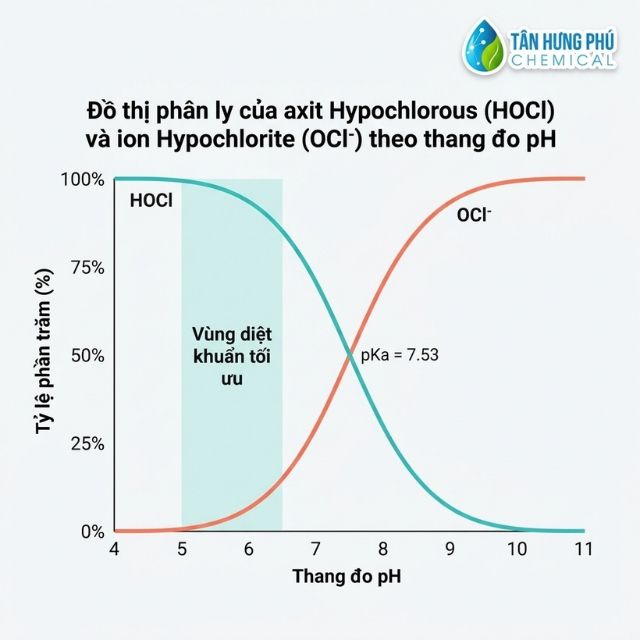
Operational Takeaway for Technicians: If aquaculture ponds or pool water show a pH > 8.0, algae blooms or turbidity may persist even after dosing substantial amounts of chlorine. This occurs because the bulk of free chlorine shifts into the sluggish OCl⁻ ion. Therefore, the absolute first step prior to chlorination is adjusting the pH into the target window of 7.2 – 7.6.
3. Microbial Cell Membrane Inactivation Mechanism by Chlorine
The disinfection mechanism of chlorine in aqueous systems operates via three sequential oxidative stages:
- 1. Membrane Penetration: Because the HOCl molecule is electrically neutral and comparable in size to a water molecule (H₂O), it effortlessly diffuses across the outer phospholipid bilayer of bacterial cells and the protective protein capsids of viruses without experiencing electrostatic resistance.
- 2. Enzymatic Inactivation: Once inside the cytoplasm, HOCl instantly oxidizes the sulfhydryl (-SH) functional groups of key metabolic enzymes (most notably enzymes driving glucose metabolism and ATP energy synthesis). This oxidative attack causes irreversible denaturation of tertiary and quaternary protein structures, severing cellular respiration pathways.
- 3. Nuclear Disruption & DNA Cleavage: HOCl oxidizes nucleotide bases, causing severe DNA strand breakage and completely terminating cellular replication. This entire cascade is completed within seconds to a few minutes of contact time, resulting in complete microbial destruction.
4. Manufacturing Technology Comparison: Sodium Process vs. Calcium Process
Industrial buyers frequently ask why different brands of Calcium Hypochlorite Ca(OCl)₂ 70% exhibit distinct solubility profiles – some dissolving rapidly into a crystal-clear solution, while others leave noticeable lime sediment. This operational difference stems from the two primary commercial synthesis pathways: the Sodium Process and the Calcium Process.
| Comparison Criteria | Sodium Process | Calcium Process |
|---|---|---|
| Reaction Chemistry | Chlorine gas reacts with caustic soda (NaOH) to yield NaOCl solution, which is then reacted with slaked lime slurry Ca(OH)₂ to crystallize high-purity calcium hypochlorite double salts. | Chlorine gas (Cl₂) is introduced directly into a suspension of slaked lime Ca(OH)₂ without intermediate NaOH usage. |
| Insoluble Residue Level | Significantly lower. Dissolves rapidly into a clear liquid with negligible insoluble settling (verified by the insoluble matter specification on the batch COA). | Higher. Contains minor amounts of unreacted calcium carbonate (CaCO₃) and slaked lime residue, leaving some white sediment at the vessel bottom. |
| Storage Stability & Moisture | High chemical stability, low hygroscopic tendency, free-flowing dry granules with minimal natural chlorine loss over time. | Moisture is engineered into a stable hydrated matrix (Hydrated 4–10%), offering higher thermal stability and lower self-ignition hazard (classified as UN 2880). |
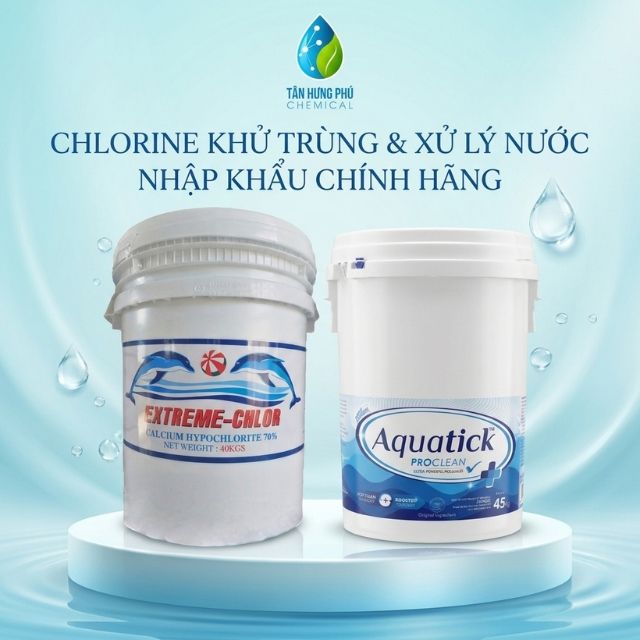
| Commercial Brand at THP | Extreme-Chlor – Sinopec Dolphin (Round Drum 40kg) | Aquatick India (Aquatick Proclean Round Drum 45kg) |
| Best Suited Applications | Commercial swimming pools, automated inline dosing feeders, closed piping systems where lime scaling must be prevented. | Large-scale shrimp and fish aquaculture farming, industrial wastewater plants, and facilities demanding cost efficiency and thermal storage safety. |
5. Practical Applications and Dosage Guidelines for Chlorine 70%
Due to its high oxidation power and economic efficiency, calcium hypochlorite is deployed as a premier disinfectant across diverse engineering operations:
Commercial Swimming Pool Disinfection
Applying calcium hypochlorite supplies essential calcium that suppresses the corrosive aggression of soft water against plaster and tile grouting. Crucially, it causes zero Cyanuric Acid (CYA) accumulation, eliminating the notorious "Chlorine Lock" condition frequently caused by prolonged use of stabilized TCCA 90% tablets:
- Routine Maintenance Dose: Dose 2 – 4 g / m³ of water (pre-dissolve and broadcast when no bathers are present), maintaining Free Available Chlorine within the standard 1.0 – 3.0 ppm range.
- Shock Treatment (Superchlorination): Following heavy rainstorms, algal outbreaks, or high combined chlorine (chloramines causing eye irritation), elevate free chlorine to ~10 ppm (~14 g / m³ of water; adjust higher if CYA exceeds 30 ppm). Execute treatment at dusk and run continuous filtration circulation overnight.
Potable Water & Municipal Supply Disinfection
For drinking water plants and municipal groundwater wells, chlorine disinfection eradicates enteric pathogens (Coliforms, E. coli) while simultaneously oxidizing dissolved metals (Fe²⁺, Mn²⁺):
- Standard Dosage: Feed 1.5 – 3.0 g / m³ of water (ensuring terminal residual chlorine at the consumer tap meets 0.2 – 1.0 mg/L according to potable water quality standards).
Industrial and Textile Wastewater Treatment
In textile dyeing and municipal sewage facilities, calcium hypochlorite performs dual roles in final effluent disinfection and advanced oxidation stages:
- Textile Effluent Decolorization: HOCl molecules cleave aromatic ring bonds and azo chromophore linkages of synthetic dyes, eliminating wastewater color before environmental discharge. Typical dosage: 20 – 50 g / m³ depending on color intensity. Note: Chlorine oxidation can form absorbable organic halides (AOX/THMs); perform jar testing and verify environmental compliance prior to large-scale adoption.
- Post-Biological Disinfection: Dose 5 – 10 g / m³ with a minimum contact time of 30 minutes to reduce total Coliform counts to regulatory discharge levels.
Aquaculture Water Preparation (Shrimp Pond Conditioning)
Used to eradicate wild trash fish, snails, and pathogenic bacteria such as Vibrio parahaemolyticus (responsible for AHPND/EMS) and fungal microsporidians (EHP) prior to postlarvae stocking:
- Reservoir Pond Conditioning Dose: 20 – 30 kg / 1,000 m³ of water (equivalent to 20 – 30 ppm). Run paddlewheel aerators continuously for 3 – 5 days to ensure thorough mixing and complete dissipation of residual chlorine down to 0.0 ppm before stocking.
6. Prime Chlorine 70% Brands Distributed at Tan Hung Phu Chemical Warehouse
To satisfy tailored requirements across varied industrial operations, Tan Hung Phu Chemical Co., Ltd imports and stocks two industry-leading commercial product lines:
| Product Line | Brand & Origin | Standard Packaging | Internal Product Link |
|---|---|---|---|
| Chinese Dolphin Chlorine | Extreme-Chlor (Sinopec Jianghan Salt Chemical – Hubei, China) Technology: Sodium Process (Low residue) |
40kg Chlorine Drum (White HDPE round drum, UN 1H2 security lock ring) | Chlorine 70% Dolphin (Round Drum 40kg) |
| Indian Aquatick Chlorine | Aquatick / Aquatick Proclean (Benchmark equivalent to Chlorine Aquafit – India) Technology: Calcium Process (Hydrated thermal safety matrix) |
45kg Indian Chlorine Drum (White 45kg Net HDPE drum with handle and lid lock clamp, UN 2880 Standard) | Aquatick Chlorine 70% India (Round Drum 45kg) |
7. Safe Dilution Guidelines and Chemical Warehouse Storage Standards
WARNING – FIRE, EXPLOSION & TOXIC GAS HAZARD (IMO CLASS 5.1 OXIDIZER):
• Never Pour Water into Chemical: Strictly adhere to the foundational safety rule: always add small increments of chlorine granules slowly into a large volume of water. Gently stir with a clean plastic rod until dissolved before adding to the system. Inverting this sequence causes violent localized exothermic boiling, splashing concentrated corrosive solution and releasing dangerous chlorine gas.
• Strictly Avoid Cross-Contamination: Never combine Chlorine 70% with organic materials, oils, greases, solvents, caustic soda, ammonia, or concentrated acids (HCl, H₂SO₄). Acid contact instantly releases massive clouds of toxic elemental chlorine gas (Cl₂), posing severe pulmonary edema and fatal asphyxiation risks.
• Never Mix with TCCA 90%: These two chlorine compounds possess incompatible decomposition mechanisms. Direct dry-state contact triggers an intensely violent thermal runaway reaction capable of rupturing containers explosively.
Personal Protective Equipment (PPE) & Warehouse Storage
- PPE Requirements: Operators must wear NIOSH-approved vapor respirators or acid-gas cartridges, tightly fitted splash goggles, heavy-duty chemical-resistant gloves, and rubber safety boots when opening drums or preparing stock solutions.
- Storage Requirements: Store on elevated pallets inside cool, dry, well-ventilated areas with temperatures strictly maintained below 30–35°C. Shield completely from direct solar radiation. Reseal drums tightly immediately after extraction to prevent moisture absorption and subsequent off-gassing.
WHOLESALE QUOTATION FOR CHLORINE 70% (40KG & 45KG DRUMS) & TECHNICAL DOSSIERS (COA, MSDS)
For water authorities, commercial pool management contractors, aquaculture operators, and chemical distributors requiring bulk supply (by pallet, ton, or full container load) with verified documentation at Ho Chi Minh City warehouse, please contact our technical sales desk directly:
Tan Hung Phu Chemical Co., Ltd (THP Chemical)
• Technical Support & Quotation Hotline / Zalo: (+84) 913 711 647
• Direct RFQ Email: tanhungphu@thpchemical.com
• Central Distribution Warehouse: Ho Chi Minh City, Vietnam (Express dispatch and container shipping across Southern and Central regions).
8. Frequently Asked Questions Regarding Chlorine 70% (FAQ)
1. Why does algae or turbidity persist even after dosing the calculated quantity of Chlorine 70%?
The primary cause is elevated water pH (> 7.8 – 8.0). At this pH range, roughly 75% to 80% of the active chlorine shifts into the slow-acting hypochlorite ion (OCl⁻) rather than the potent hypochlorous acid (HOCl). Use pH reducers (muriatic acid / pH Minus) to depress water pH to the 7.2 – 7.6 window to activate peak HOCl germicidal efficacy.
2. Should I select Dolphin Chlorine 40kg (Sodium Process) or Aquatick 45kg (Calcium Process)?
For commercial resort swimming pools, potable water plants, and systems with automated inline chemical metering, Dolphin Chlorine (Sodium Process) is recommended due to its clear dissolution and non-scaling profile. For large-scale aquaculture ponds, shrimp farm biosecurity, and industrial effluent treatment, Aquatick India (Hydrated Calcium Process) represents a cost-effective, thermally resilient, and storage-safe choice.
3. Does Chlorine 70% raise the calcium hardness of water?
Yes. Because of its calcium base, each 1 ppm of free chlorine generated from Ca(OCl)₂ introduces approximately 0.7 ppm of Calcium Hardness (CH). This protects soft water from aggressively leaching pool plaster and grout; however, in regions with very hard source water (> 400 ppm), the Langelier Saturation Index (LSI) should be routinely monitored to avoid scaling.
4. How long after chlorinating a shrimp pond can postlarvae be safely stocked?
Typically 3 to 5 days with mechanical paddlewheel aerators running at full output to dissipate free chlorine. Prior to stocking, test with an analytical kit to confirm residual chlorine has dropped to exactly 0.0 ppm to avoid gill burn and high seedling mortality.
5. What is the wholesale price of Chlorine 70% and where to buy in Ho Chi Minh City?
Wholesale pricing fluctuates based on chemical synthesis technology (Sodium vs. Calcium Process), package specifications (40kg vs. 45kg drums), purchase volumes, and prevailing import exchange rates. Tan Hung Phu Chemical maintains consistent inventory in HCMC with lot-specific COA and MSDS documentation. Contact our technical sales hotline/Zalo at (+84) 913 711 647 for project quotes.
6. How does Chlorine 70% differ from TCCA 90% tablets?
Chlorine 70% (calcium hypochlorite) is fast-dissolving, contains no Cyanuric Acid (CYA), and slightly raises calcium hardness, making it ideal for shock dosing and general water purification. TCCA 90% is slow-dissolving, acidic, and continuously accumulates stabilizer CYA, making it suitable for routine maintenance in unstabilized outdoor pools. Never mix the two dry chemicals together.
9. Scientific References & Chemical Databases
The reaction chemistry, hydrolysis equilibria, and technical benchmarks referenced in this article are compiled from authoritative international standards:
- PubChem Chemical Database (NCBI – U.S. National Library of Medicine): Calcium Hypochlorite (Compound Summary CID 24497) – Physicochemical properties, toxicological data, and oxidation mechanisms.
- World Health Organization (WHO): Guidelines for Drinking-water Quality (Fourth Edition) – Principles of chlorine disinfection and the role of hypochlorous acid in community potable water treatment.
- NSF International Standard: NSF/ANSI/CAN Standard 60 – Drinking Water Treatment Chemicals (Health effects safety evaluation for drinking water additives).
- National Technical Regulation on Domestic Water Quality (Vietnam): Circular No. 52/2024/TT-BYT (QCVN 01-1:2024/BYT) of the Ministry of Health stipulating acceptable free residual chlorine limits between 0.2 – 1.0 mg/L.
- Manufacturer Technical Documentation (TDS / MSDS):
- Safety Data Sheet (SDS) & Specification – Calcium Hypochlorite 70% Extreme-Chlor (Sinopec Jianghan Salt Chemical Hubei Co., Ltd) – [Contact via Zalo for Documents]
- Safety Data Sheet (SDS) & COA – Aquatick Calcium Hypochlorite 70% Hydrated UN 2880 (Jal Aqua International Limited – India) – [Contact via Zalo for Documents]

