
News & Event
What is Glacial Acetic Acid (GAA)? CH3COOH, Freezing Point at 16.6°C & Industrial Applications
In procurement and raw material handling across food processing plants, textile dyeing, and chemical manufacturing facilities, the term glacial acetic acid (abbreviated as GAA) frequently appears on technical specifications and Certificates of Analysis (COA). Unlike conventional diluted acid solutions, this highly concentrated form of CH3COOH possesses unique physical characteristics that require plant operators and warehouse logistics teams to master strict temperature control protocols and chemical safety standards.
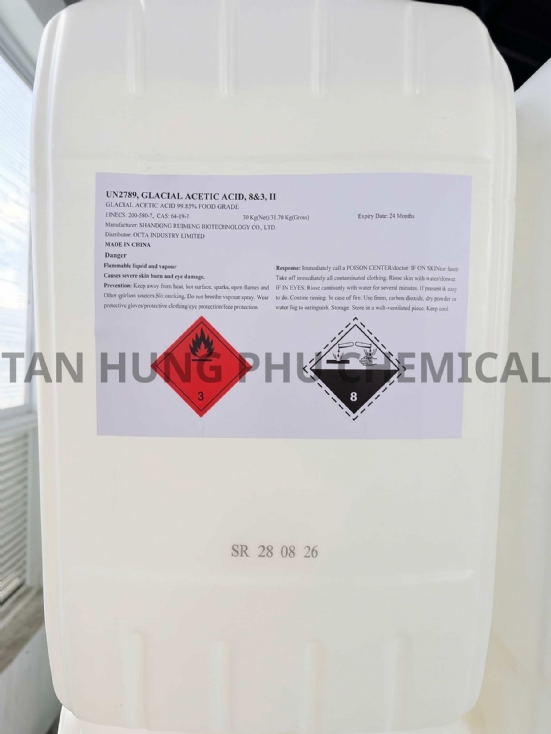
Table of Contents:
- 1. What is Glacial Acetic Acid (GAA)?
- 2. Why GAA Freezes at 16.6°C and Safe Thawing Procedures
- 3. Physicochemical Properties and Safety Classification of CH3COOH
- 4. Differentiating Acetic Acid Tech Grade and Food Grade
- 5. GAA Product Lines Distributed by Tan Hung Phu Chemical
- 6. Occupational Safety Standards and Warehouse Storage Guidelines
- 7. Quotations and Sourcing Guidelines for GAA in HCMC
- 8. Frequently Asked Questions (FAQ)
- 9. References & SDS Directory
1. What is Glacial Acetic Acid (GAA)?
What is GAA? Glacial Acetic Acid (abbreviated as GAA) is the commercial and technical designation for pure, anhydrous (water-free or nearly moisture-free) CH3COOH, typically with an active assay ranging from ≥ 99.0% to 99.85% by weight (wt%). Under standard ambient room temperatures in Vietnam, GAA exists as a clear, colorless liquid with a pungent, sharply sour, and characteristic odor.
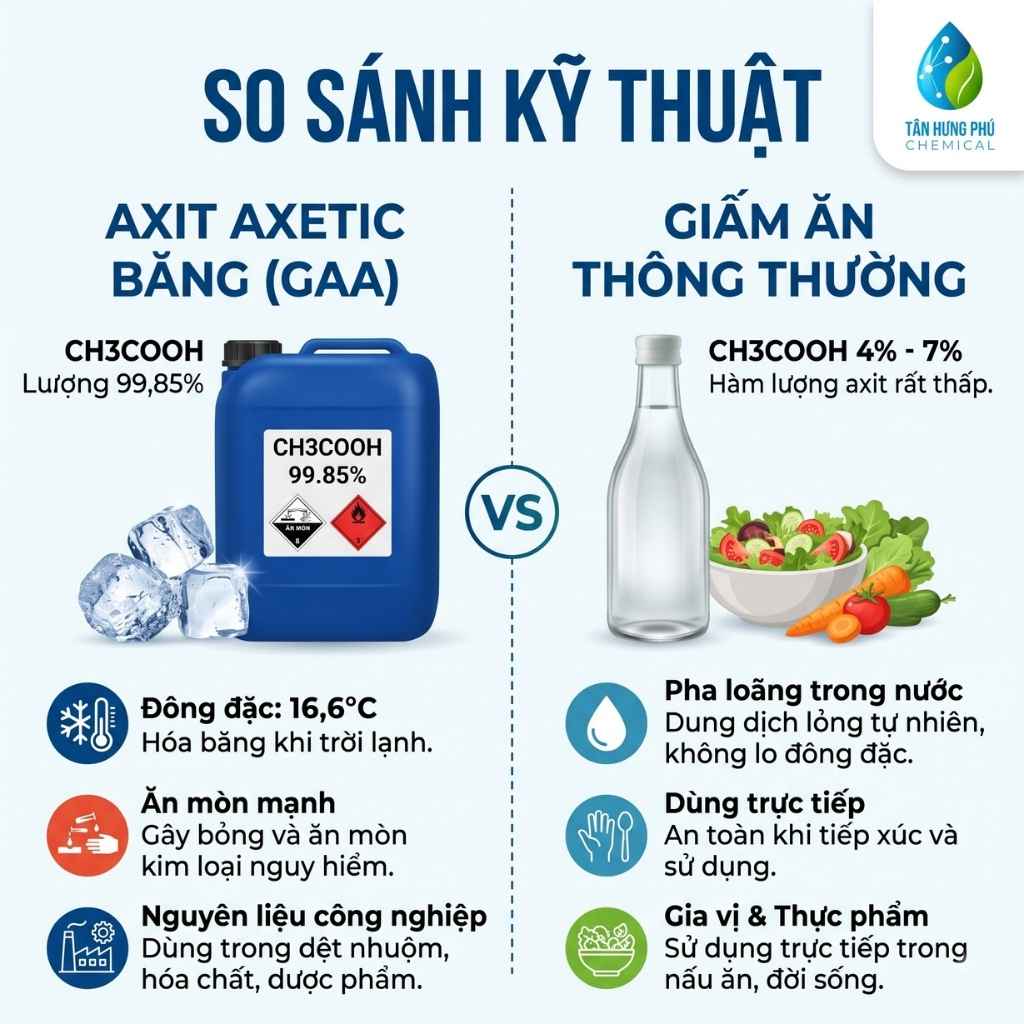
Many users often associate this compound with culinary vinegar. However, in terms of concentration and hazard levels, the two products are fundamentally different:
- Standard Culinary Vinegar: Contains only about 4–7% CH3COOH diluted in water, making it safe for direct use in daily culinary preparations.
- Glacial Acetic Acid (GAA): Exhibits an assay of ≥ 99.0% to 99.85% (with water content ≤ 0.15% in 99.85% grades). At this concentrated level, the chemical has strong corrosive properties and causes severe chemical burns upon direct contact with skin or eye mucous membranes.
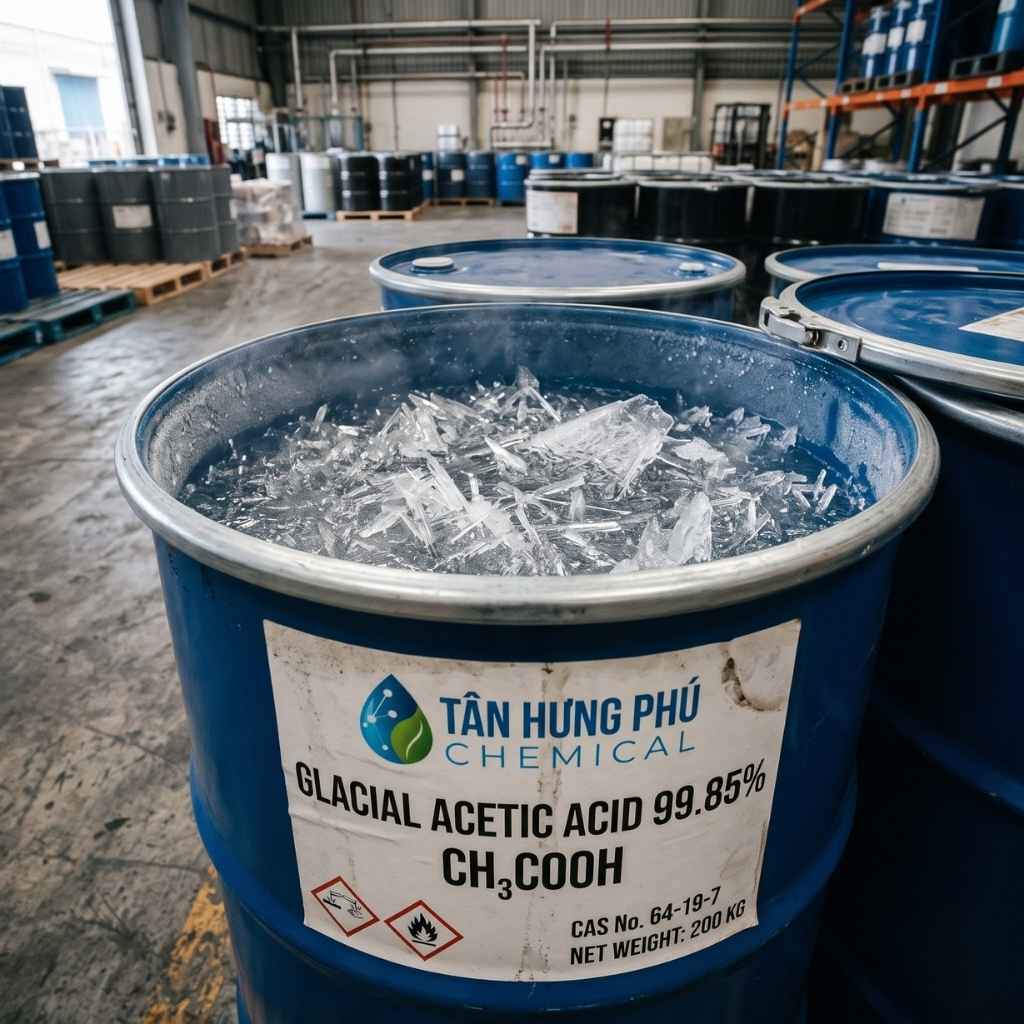
The origin of the term "glacial" stems directly from the distinctive physical behavior of anhydrous CH3COOH: when the ambient temperature drops below 16.6°C (61.9°F), the liquid crystallizes into solid ice-like structures along the walls of the storage container.
2. Why GAA Freezes at 16.6°C and Safe Industrial Thawing Procedures
The Freezing Phenomenon in Transit and Storage
In practical cargo handling, the freezing point of pure acetic acid is 16.6°C. Because this threshold is close to standard cool temperatures, the phenomenon of acetic acid freezing inside carboys, drums, or IBC tanks occurs frequently under several circumstances:
- Storage and transit in northern provinces or highland areas during winter when air temperatures drop below 16°C.
- Import cargo freshly unloaded from vessel holds, reefer containers, or transit through temperate climate zones.
- Storage in climate-controlled raw material warehouse sections with active low-temperature air conditioning in food or pharmaceutical facilities.
Correlation Between Water Content and Freezing Point
From a physicochemical standpoint, the freezing point (Crystallization Point) of GAA is sensitive to residual water content. Within the 99–100% concentration range, every 0.1% increase in water content depresses the freezing point by approximately 0.2°C (estimated value). In comparison with manufacturer specifications:
- GAA grades with assay ≥ 99.85% (water content ≤ 0.15%) from Lotte Ineos or Shandong Ruimeng feature standard freezing points from ≥ 16.2°C to ≥ 16.35°C (actual measured COA results consistently achieve ≥ 16.38°C).
- GAA grades with assay ≥ 99.0% from Chang Chun Petrochemical specify a standard freezing point limit of ≥ 14.0°C.
Additionally, unlike water (which expands upon freezing, potentially rupturing containers), acetic acid contracts upon freezing. Nevertheless, non-uniform crystallization can still clog bottom discharge valves of IBC tanks and metering pump lines, leading to assay deviations if operators draw the liquid fraction from the top before the bottom crystals have fully melted.
Safe Technical Procedure for Thawing GAA
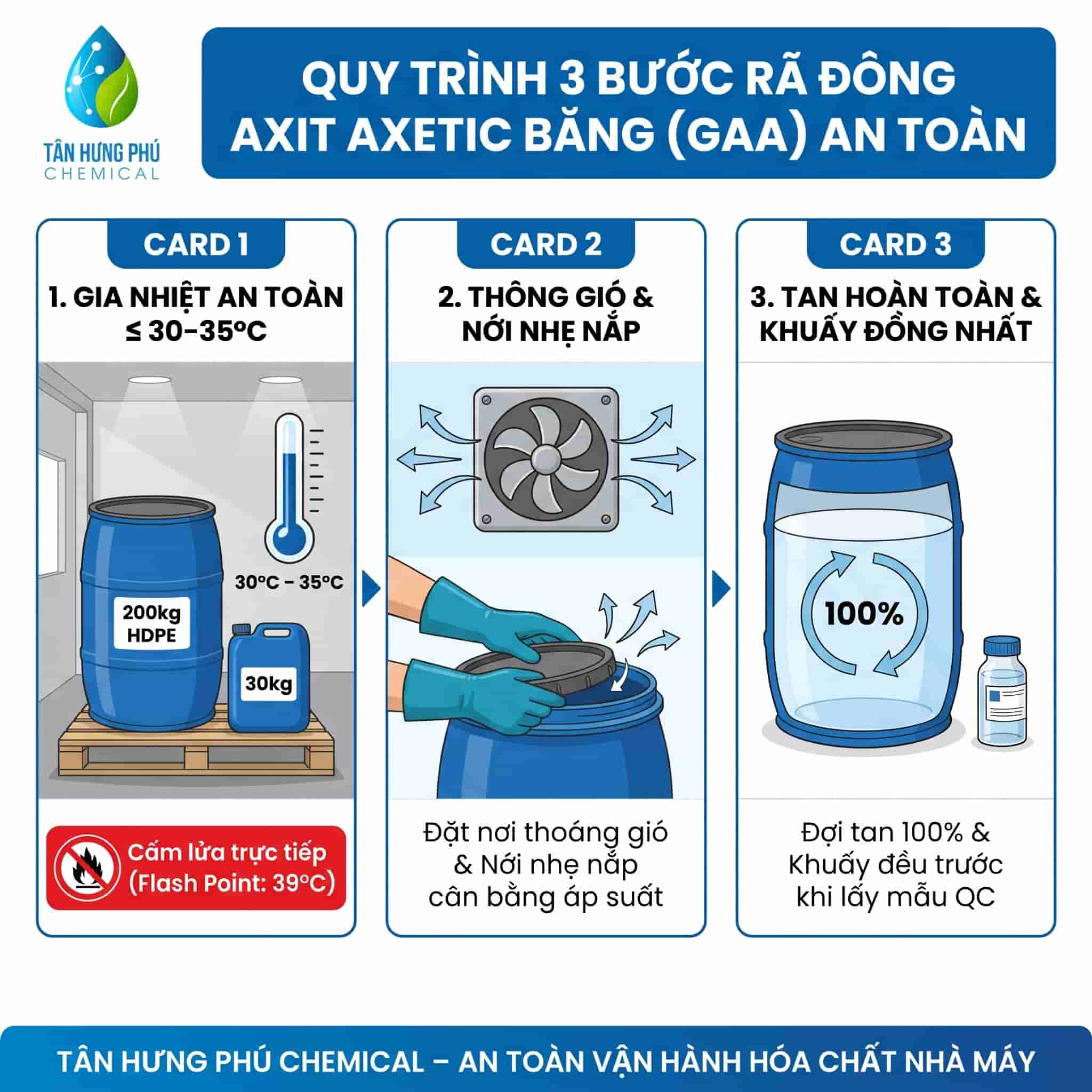
When crystallized carboys or drums of GAA are identified, operating personnel must carry out the thawing procedure following these safety steps:
- Controlled Heating Temperature: Relocate containers into a warm room or a heating chamber utilizing circulating warm air or a warm water bath controlled strictly at ≤ 30–35°C (always maintained below the 39°C flash point threshold).
- Ventilation and Pressure Relief: Place containers in a well-ventilated area, away from heat sources and electrical sparks. Slightly loosen the carboy/drum bung/cap to relieve and balance internal pressure during phase transition, while protecting against dust or ambient moisture ingress.
- Complete Liquefaction and Homogenization: During partial crystallization, solid and liquid phases may exhibit slight variations in water content. Therefore, it is mandatory to wait until the entire crystalline mass is 100% completely melted, followed by thorough agitation or stirring to homogenize the solution before QC sampling or batch dispensing.
3. Physicochemical Properties and Safety Classification of Acetic Acid (CH3COOH)
For designing storage tanks, metering pump pipelines, and accurate blending ratios, R&D and process engineers can refer to the standard physicochemical properties of CH3COOH below:
| Physicochemical & Safety Parameter | Standard Value / Technical Specification |
|---|---|
| Molecular Formula | CH3COOH |
| Molecular Weight (M) | 60.05 g/mol |
| Appearance | Clear, colorless liquid (APHA color ≤ 10 – 30 depending on grade), pungent vinegar odor |
| Density (at 20°C) | 1.049 g/cm³ (COA testing range: 1.048 – 1.051 g/ml; Sp Gr 20/4°C: 1.049 – 1.056) |
| Melting / Freezing Point | 16.6°C (61.9°F) for pure anhydrous CH3COOH |
| Boiling Point | 118°C (COA distillation range: 117.5 – 119.0°C) |
| Flash Point | ~39°C (Closed Cup) |
| Acid Dissociation Constant (pKa) | 4.76 |
| Solubility | Miscible in all proportions with water |
| International Food Additive Code | INS 260 (or E260 – strictly applicable to Food Grade) |
| Dangerous Goods Transport Classification | UN 2789, Class 8 (Corrosive) – Subsidiary Risk 3 (Flammable Liquid), Packing Group II (PG II) |
| GHS Hazard Statements | H226 (Flammable liquid and vapor), H314 (Causes severe skin burns and eye damage) |
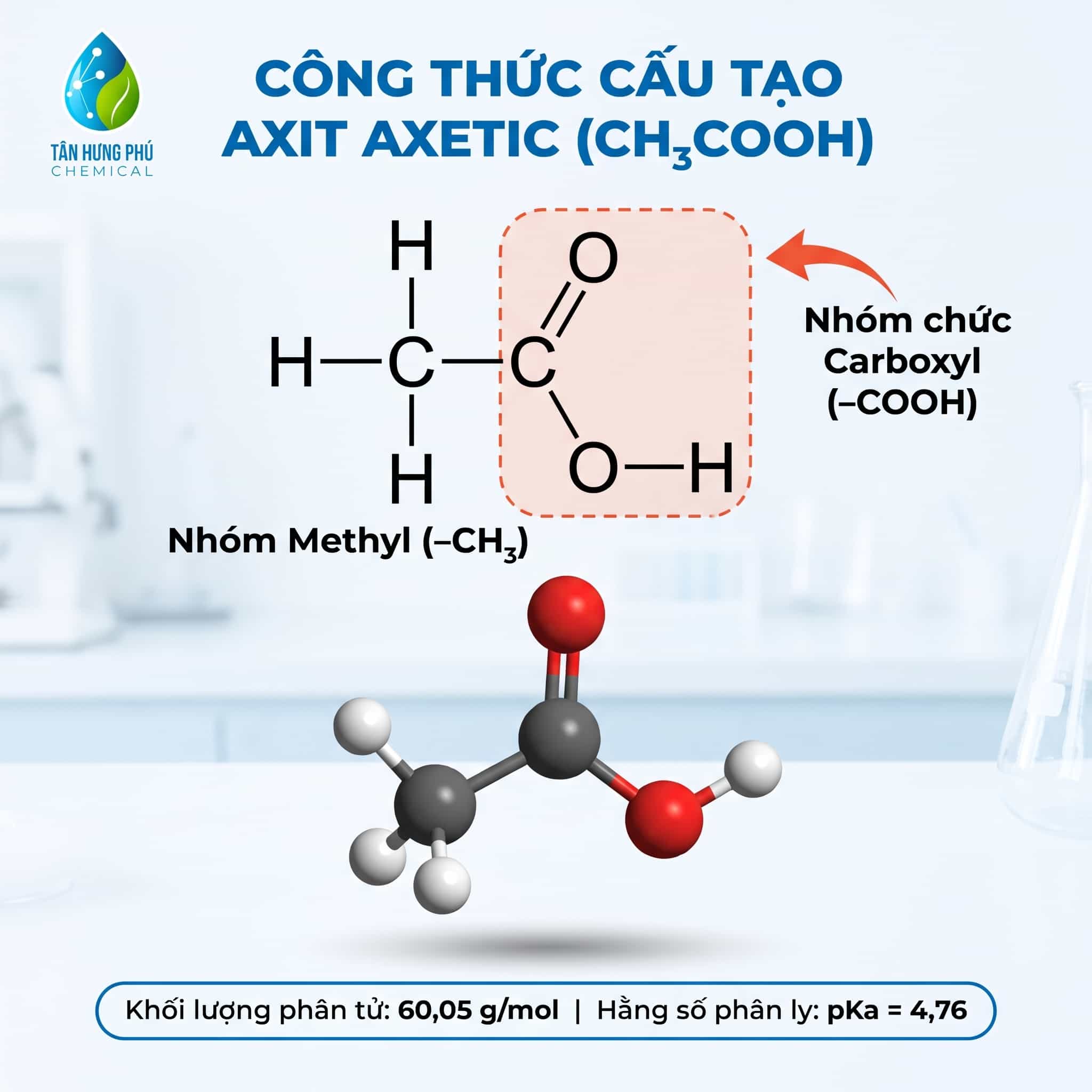
Chemical Properties of Acetic Acid in Industrial Applications
Due to its carboxyl functional group (-COOH), the chemical properties of acetic acid exhibit all characteristic reactions of a monocarboxylic acid:
- Weak Acidity but Highly Corrosive in Concentrated Form: In aqueous solution, CH3COOH acts as a weak acid with pKa = 4.76 (partially dissociating into H+ and CH3COO− ions), providing smoother and more bufferable pH adjustment compared to strong mineral acids. However, in its glacial state (GAA ≥ 99%), it exhibits strong hygroscopic action, corrodes common metals, and causes severe tissue necrosis (GHS H314).
- Acetate Salt Formation: Reacts with bases, basic oxides, or carbonate salts to yield acetate salts widely used across industry; for example, reacting with caustic soda (NaOH) or soda ash to yield Sodium Acetate (CH3COONa) used as a pH buffering agent in textile dyeing and food applications.
- Esterification: When heated with alcohols in the presence of an acid catalyst, CH3COOH undergoes esterification to produce important industrial solvents. A prominent example is its reaction with ethanol to yield Ethyl Acetate (CH3COOC2H5) – an essential solvent in paints, printing inks, and adhesives.
4. Differentiating Acetic Acid Tech Grade and Food Grade: Specifications & Applications
In the B2B chemical market, GAA is distinctly divided into two grades: acetic acid tech grade (industrial grade) and acetic acid food grade. Selecting the correct grade not only optimizes production economics but is also a mandatory compliance requirement under food safety regulations.
The table below outlines technical criteria directly cross-referenced from TDS and COA documents of manufacturers distributed by Tan Hung Phu (Lotte Ineos South Korea, Shandong Ruimeng China, and Chang Chun Taiwan):
| Technical Criteria | Tech Grade (Industrial Grade) | Food Grade (Food Grade Additive) |
|---|---|---|
| CH3COOH Assay (min) | • ≥ 99.85 wt% (Lotte Ineos TDS) • ≥ 99.0 wt% (Chang Chun COA) |
• ≥ 99.85 wt% (Lotte Ineos COA: actual 99.88% & Shandong Ruimeng COA: actual 99.85%) |
| Heavy Metal Limits As / Pb (mg/kg or ppm) | • Heavy Metals (as Pb): ≤ 1 ppm (Lotte Ineos TDS) or ≤ 0.001 wt% (Chang Chun COA) • As: Not specified on industrial TDS/COA |
• Heavy Metals (as Pb): ≤ 0.5 ppm (Lotte Ineos COA, actual < 0.1 ppm) / ≤ 2.0 mg/kg (Shandong Ruimeng COA, actual < 2.0 mg/kg) • Arsenic (As): ≤ 1.0 mg/kg (Shandong Ruimeng COA, actual < 0.01 mg/kg) |
| Water Content & Freezing Point | • Water: ≤ 0.15 wt% (Lotte Ineos) • Freezing point: ≥ 16.35°C (Lotte Ineos) / ≥ 14.0°C (Chang Chun) |
• Water: ≤ 0.15 wt% (Lotte Ineos) / ≤ 0.1 wt% (Shandong Ruimeng) • Freezing point: ≥ 16.35°C (Lotte Ineos) / ≥ 16.2°C (Shandong Ruimeng) |
| Reference Standards | ASTM / BP Test Methods (per Lotte Ineos TDS) | Food Grade – INS 260 / E260 |
| Primary Applications | Industrial manufacturing, chemical synthesis, surface treatment | Food additive (INS 260), food and beverage processing |
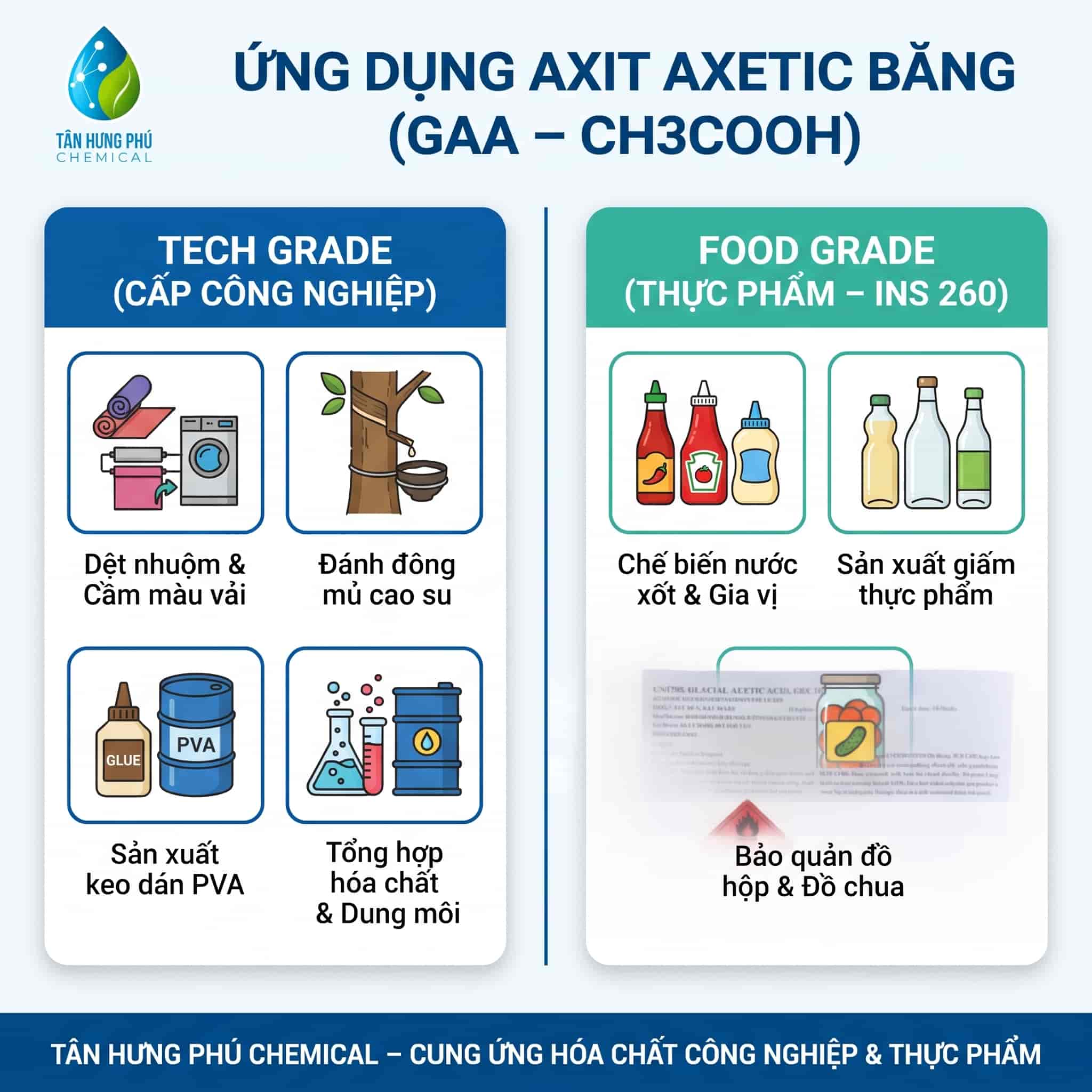
Applications of Acetic Acid Tech Grade
Industrial acetic acid is used as a chemical feedstock and reaction environment regulator across multiple industrial sectors:
- Textile Dyeing and Finishing: Regulates and neutralizes dyebath pH following alkaline mercerizing processes, promoting even dye exhaustion and consistent color fastness without deteriorating the mechanical tensile strength of fibers.
- Rubber Latex Processing and Tanning: Serves as a controlled coagulating agent for natural rubber latex and assists pH regulation in the pickling stage of leather tanning.
- Adhesives and Polymer Manufacturing: Primary raw material for synthesizing Vinyl Acetate Monomer (VAM) – the precursor for Polyvinyl Acetate (PVA) polymers and adhesives used in woodworking, paper packaging, and emulsion paints.
- Chemical and Solvent Synthesis: Production of ester solvents (such as Ethyl Acetate, Butyl Acetate), metal acetate salts, and industrial descaling cleaners.
Applications of Acetic Acid Food Grade (INS 260)
For food processing facilities, using food-grade acetic acid (additive code INS 260 or E260) with strictly controlled heavy metal limits (Pb, As) and organic impurities is mandatory:
- Acidity Regulation: Controls sourness and stabilizes pH in the formulation of sauces (chili sauce, ketchup, mayonnaise), condiments, and bottled seasonings.
- Culinary Vinegar and Canning: Diluted at specified ratios with pure water to produce culinary vinegar or pickling brines for vegetables, gherkins, and canned seafood.
- Food Preservation Support: The low pH environment established by INS 260 inhibits the proliferation of many spoilage bacteria and molds, naturally extending product shelf life.
5. GAA Product Lines Distributed by Tan Hung Phu Chemical
To meet diverse requirements ranging from industrial manufacturing to compliant food processing, Tan Hung Phu Chemical Co., Ltd. directly imports and distributes 4 distinct GAA product lines categorized by origin and grade:
- Korea Lotte Ineos GAA (Tech Grade): Korea Lotte Ineos Glacial Acetic Acid 99.85% (Tech Grade)
- Korea Lotte Ineos GAA (Food Grade): Korea Lotte Ineos Food Grade Acetic Acid 99.85% (E260 Food Grade)
- Taiwan Chang Chun GAA (Tech Grade): Taiwan Chang Chun Glacial Acetic Acid CH3COOH
- China Shandong Ruimeng GAA (Food Grade): Food Grade Acetic Acid 99.85% (Glacial Acetic Acid Food Grade E260)
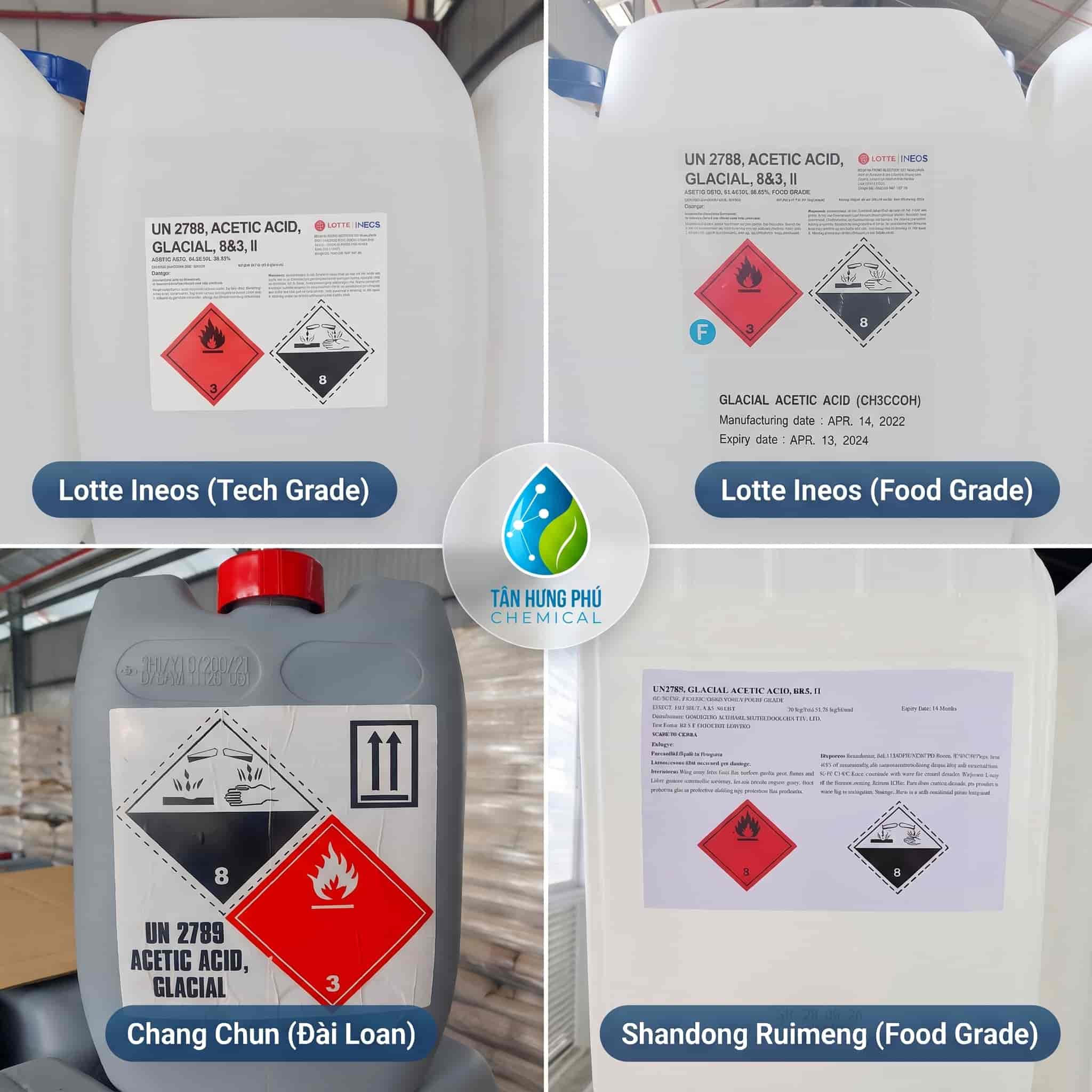
Products are flexibly supplied in standard packaging configurations including 30 kg carboys made of specialized corrosion-resistant materials for facilities with high-volume demand. Valued clients and procurement teams are invited to visit the product links above to review detailed specifications and download batch COAs.
6. Occupational Safety Standards and Warehouse Storage Guidelines
Because GAA is classified under hazardous goods code UN 2789, Class 8 (Sub-risk 3), PG II, posing both severe corrosive hazards (H314) and flammable vapor risks (H226), chemical dispensing, dilution, and warehouse storage must strictly comply with the following safety measures:
Personal Protective Equipment (PPE) When Handling
- Hand Protection: Prefer Butyl rubber gloves when directly handling or when exposed to concentrated GAA over extended periods. Nitrile gloves are only suitable for short-duration splash protection and must be replaced immediately upon chemical contact.
- Eye and Face Protection: Wear tightly sealed chemical splash goggles combined with a face shield when opening drum bungs or connecting transfer hoses.
- Respiratory Protection: Operate in areas equipped with local exhaust ventilation; equip personnel with respirators fitted with combination organic vapor and acid gas cartridges when operating in high vapor concentration zones.
Storage Conditions and Chemical Compatibility
- Storage Facility: Warehouses must be well-ventilated, equipped with secondary containment berms, and have emergency safety showers and eyewash stations within quick access range.
- Two-Way Temperature Control: Keep warehouse areas cool, isolated from heat sources, sparks, and direct sunlight so temperatures do not approach the flash point (~39°C). Conversely, during cold weather, maintain storage temperatures above 18°C to prevent crystallization from disrupting plant production.
- Segregation from Incompatibles: Store strictly segregated from strong oxidizing agents (such as nitric acid, chromic acid, peroxides, potassium permanganate), strong bases (NaOH, KOH), and active metals.
7. Acetic Acid Quotations and Sourcing Guidelines in HCMC
When procurement departments look to purchase acetic acid, B2B wholesale pricing is generally dynamic and depends on 5 primary factors:
- Quality Grade: Food Grade (INS 260) requires stringent refining, trace heavy metal control, and food compliance documentation, leading to a distinct price structure compared to Tech Grade.
- Country of Origin: Imports from South Korea (Lotte Ineos), Taiwan (Chang Chun), or China (Shandong Ruimeng) carry differing import tariff schedules and logistics costs.
- Packaging Format: 30 kg carboys.
- Order Volume & Contract Terms: Full container load (FCL) orders or recurring quarterly/annual supply contracts consistently receive preferential commercial discount policies compared to spot orders.
- Market Fluctuations & Exchange Rates: Global prices of upstream methanol/carbon monoxide, international ocean freight rates, and currency exchange rates at the time of import.
If your enterprise is considering where to source acetic acid with reliable supply stability, Tan Hung Phu Chemical Co., Ltd. is a direct distributor of CH3COOH chemicals in HCMC and neighboring industrial provinces (Binh Duong, Dong Nai, Long An, Ba Ria – Vung Tau). Backed by warehouse facilities in HCMC, every dispatched batch is accompanied by standard compliance documentation:
- Original Certificate of Analysis (COA) from the manufacturer matching the batch/lot number on the packaging.
- Standard 16-section Safety Data Sheet (MSDS / SDS).
- Regulatory compliance documentation [TO BE CONFIRMED: self-declaration dossier / conformity declaration complying with Food Safety regulations for Food Grade INS 260].
REQUEST QUOTATION FOR GLACIAL ACETIC ACID (GAA) & TECHNICAL DOSSIER (COA, MSDS)
To receive an updated acetic acid price quotation tailored to your required grade (Food Grade / Tech Grade), packaging specification, and actual plant volume requirements, please contact Tan Hung Phu's B2B sales division directly:
Tan Hung Phu Chemical Co., Ltd. (THP Chemical)
• Hotline / Zalo Consultation & Quotes: 0913 711 647
• Email for RFQ: tanhungphu@thpchemical.com
• Warehouse: Ho Chi Minh City Area (Prompt delivery supported via dedicated delivery trucks and tankers).
8. Frequently Asked Questions about Glacial Acetic Acid (FAQ)
1. What is Glacial Acetic Acid (GAA) and how does it differ from diluted acetic acid?
Glacial Acetic Acid (GAA) is highly concentrated, nearly anhydrous CH3COOH with an assay of ≥ 99.0% to 99.85%. The name "glacial" comes from its property of solidifying into ice-like crystals when temperatures drop below 16.6°C, whereas diluted acetic acid solutions or culinary vinegar (4–7%) have much lower freezing points.
2. Does frozen (or non-frozen) acetic acid indicate fake or substandard quality?
The freezing point (~16.6°C for pure chemical) is merely a physical indicator of assay concentration. When ambient temperatures drop below 16°C, GAA crystallization is a natural phenomenon. Conversely, if warehouse temperatures are at 20–30°C, GAA remains completely liquid; not freezing does not mean the product is fake or substandard. To verify exact assay and purity, QC teams must rely on analytical test results in the batch COA.
3. Can Tech Grade GAA substitute for Food Grade in food processing?
Absolutely not. Although both grades may share an assay of ≥ 99.85%, Food Grade (INS 260) is strictly controlled regarding heavy metals (such as Lead and Arsenic), permanganate oxidation time, and possesses valid food safety compliance certification. Tech Grade is strictly reserved for textiles, rubber, and industrial chemicals.
4. How should glacial acetic acid be safely diluted with water?
When diluting GAA, operators must strictly follow the rule: slowly add acid to water (never pour water into concentrated acid), stirring continuously in an acid-resistant tank equipped with a vapor extraction system, while wearing chemical splash goggles and butyl rubber gloves.
5. What is the recommended warehouse storage temperature for GAA?
GAA warehouse storage should ideally be maintained in a cool range of approximately 18°C to 30°C. This temperature is higher than the freezing point (16.6°C) to prevent crystallization that can clog tank/drum valves, and safely lower than the flash point (~39°C) to limit evaporation and reduce fire risk.
6. Where to purchase ready-stock acetic acid (CH3COOH) in HCMC with full COA and MSDS?
Enterprises can purchase directly from Tan Hung Phu Chemical Co., Ltd. We maintain steady inventory in HCMC for both Food Grade and Tech Grade from South Korea (Lotte Ineos), Taiwan (Chang Chun), and China (Shandong Ruimeng), backed by batch-specific COAs and standard SDS.
9. References & Manufacturer SDS Directory
The physicochemical parameters, GHS safety classifications, and quality indicators in this article are cross-referenced from international scientific databases and original manufacturer technical documents:
- PubChem Compound Database (NCBI – USA): Acetic Acid Compound Summary (CID 176) – Physical properties, freezing point 16.6°C, flash point, and GHS classifications (H226, H314).
- National Institute of Standards and Technology (NIST Chemistry WebBook): Thermodynamic data and physical constants for Acetic Acid (CAS No. 64-19-7).
- Food Additive Regulations in Vietnam: Circular No. 24/2019/TT-BYT of the Ministry of Health regulating management and use of food additives (List of permitted food additives – Glacial Acetic Acid INS 260).
- Manufacturer Technical Data & Safety Data Sheets (TDS / COA / SDS):
- Safety Data Sheet (SDS) & Technical Data Sheet – Glacial Acetic Acid 99.85% (Lotte Ineos Chemical Co., Ltd – South Korea)
- Safety Data Sheet (SDS) & COA – Glacial Acetic Acid 99.85% Food Grade (Lotte Ineos Chemical Co., Ltd – South Korea)
- Safety Data Sheet (SDS) & COA – Glacial Acetic Acid 99.85% Food Grade (Shandong Ruimeng Biotechnology Co., Ltd – China)
- Safety Data Sheet (SDS) & Specification – Glacial Acetic Acid GAA 99.0% min (Chang Chun Petrochemical Co., Ltd – Taiwan)

